
How to Search Lafayette Parish Criminal Dockets
The Lafayette Parish Clerk's Criminal Department files formal charges once the 15th JDC District Attorney sends them over, and felony cases live in the Lafayette Parish 15th Judicial District Court. For online lookup, the Clerk's current route is ClerkConnect. It lists Criminal Cases among its covered categories. Note that access is paid. The public landing page does not show the full Lafayette form, so treat any login screen you see elsewhere as a poor guide to the real fields. A citation or criminal summons may point somewhere else entirely. Lafayette City Court and the local municipal courts run their own dockets, and misdemeanors there can stay off the district criminal record. So confirm the court first. Then pull the case number, caption, and charge. Use the approximate date to narrow the docket search or records request.
- Read the summons, notice, or prior case material to identify the named court and division.
- For a 15th JDC matter, open the official ClerkConnect route and choose the criminal category after obtaining authorized access.
- Enter the case or docket number exactly when it is known; use permitted identifying information only when a number is unavailable.
- Check the header, case history, setting entries, minutes, and reported disposition together.
- Contact Criminal Records for an image, minute, judgment, or certified copy that the online history does not provide.
Lafayette Criminal Docket ClerkConnect Route
ClerkConnect is a local Lafayette Parish portal, not a statewide Louisiana trial-docket search. The Clerk confirms it covers criminal cases, case history, service, minutes, disposition, and traffic information. It works well for orientation and for paid records. Just know the public landing page does not lay out a Lafayette-specific field list, sample docket, or codebook. Go in with a plan. Pick the court and the criminal category. Lead with the case number. Check any returned setting against the current court calendar. Keep in mind what a history line proves. It confirms an event occurred, but not the charging instrument, motion, signed ruling, or transcript behind it. The Lafayette Clerk Criminal Department posts its record-request route and what the department handles.
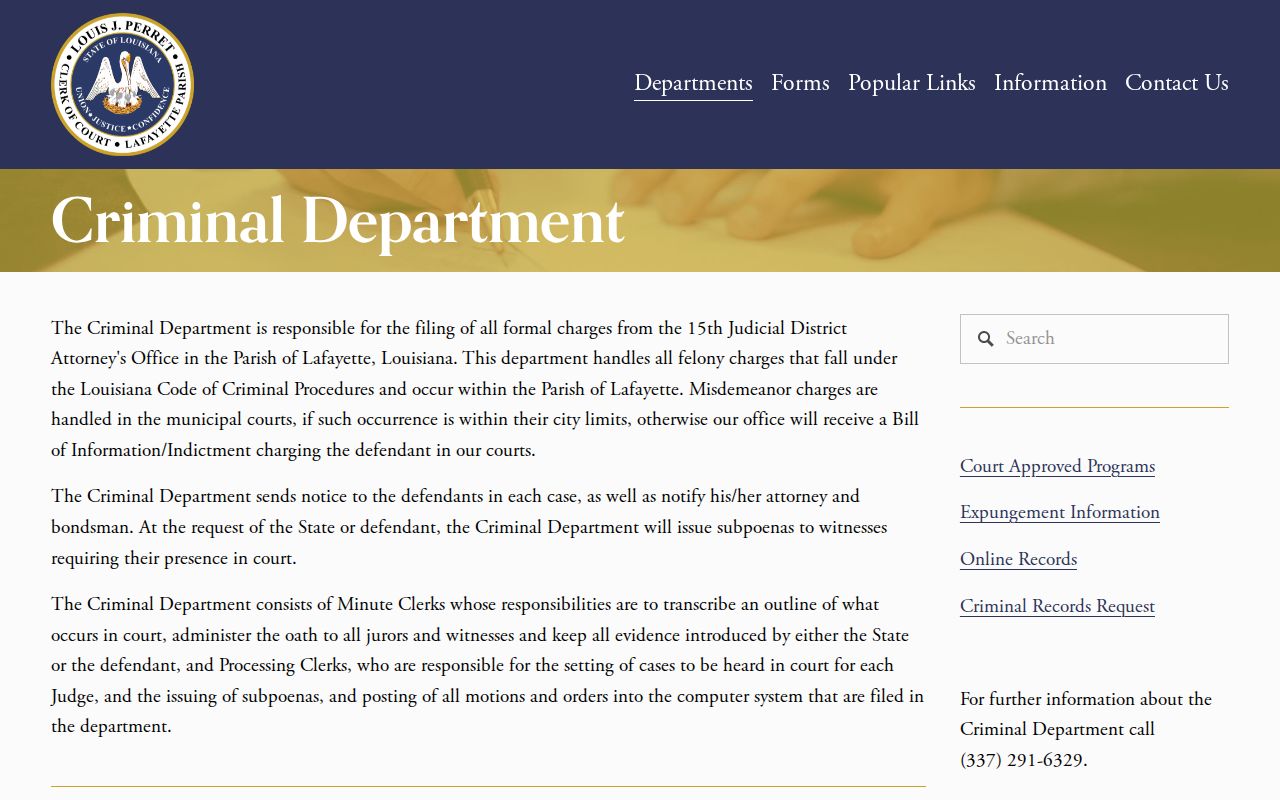
When the paid docket view leaves a records question open, the Criminal Department is the documented Lafayette Parish fallback. Contact it directly for what the screen cannot settle.
What a Lafayette Criminal Docket Shows
A Lafayette criminal docket usually lines up the court, division, case number, defendant or caption, filing information, case history, settings, minutes, and reported status or disposition. Other fields show up when they matter. These include offense or charge, event time, hearing type, sentence, and probation. Not every record carries every field. And since ClerkConnect runs on paid access, its exact live screen layout is not publicly spelled out.
| Case number | The preferred Lafayette identifier for a criminal lookup or request; a universal public case-number format is not documented. |
|---|---|
| Caption or defendant | The case heading associated with the criminal matter. |
| Charge information | A docket may identify an offense, charging event, or amended allegation, but the underlying document may require a separate request. |
| History and minutes | Chronological entries for service, motions, hearings, and court action. A minute entry is distinct from a filed motion or judgment. |
| Setting | The scheduled arraignment, motion, pretrial, trial, or other court event. |
| Disposition and sentence | Reported outcome and sentence-related information that should be read with the controlling court record. |
The word "closed" is not the whole story. A Lafayette docket entry can mark a partial event, a later action, an appeal, or a restriction that only the court record itself can confirm. Read the entry, then verify.
Lafayette Criminal Docket Tracks and Calendar
The 15th JDC calendar sorts criminal work into blocks. Felony motions, felony and misdemeanor arraignments, criminal pretrial, criminal nonsupport, trials, and traffic arraignment or rules each get their own slot. Each division adds its own layer on top. Division K runs criminal Track 5, while Division L runs criminal Track 3. Arraignments often go to the Commissioner. And a criminal trial date can be set at a pretrial conference or in open court. Division K's official page lays out this Lafayette criminal-track and calendar context.
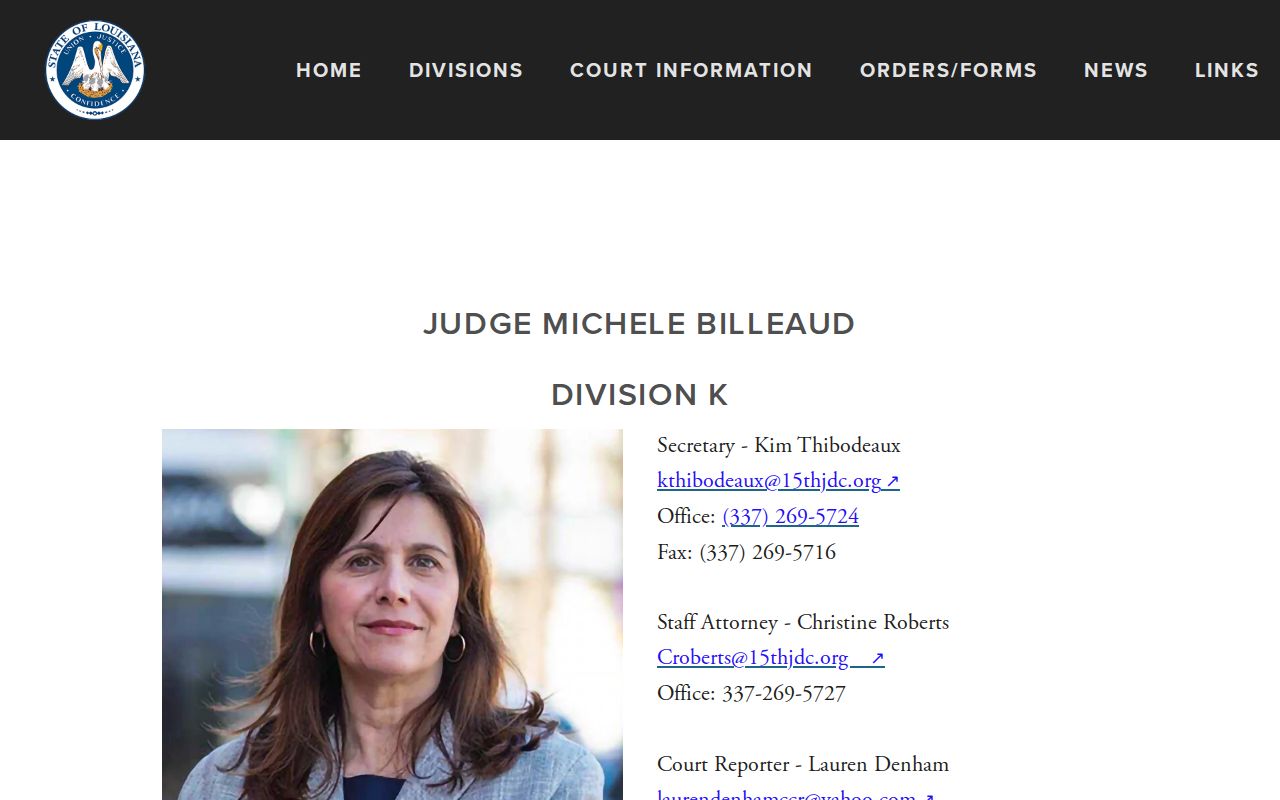
A division track helps you read a Lafayette criminal setting, but it is still general. For any one case, the current order or the newest docket entry is the precise source.
Stages on Lafayette Criminal Dockets
A district criminal case can run from formal charge through arraignment, motion practice, pretrial, plea or trial, disposition, and sentencing. The docket logs each step's timing and court action. Along the way it may pick up service entries, bond, notices, continuances, minute entries, and post-sentence events. No case follows one uniform sequence, though. Expect variation.
Docket flow: Charge filed › arraignment › pretrial settings › plea or trial › disposition › sentencing.
One setting can replace an earlier one. When several dates appear in a Lafayette docket, find the newest event backed by an order, check the division and calendar label, then confirm the date with the Clerk or division office. A master calendar cross-checks; it does not replace the case record.
Lafayette Criminal Docket Terms
Calendar shorthand can make a criminal case history look more final than it is. The 15th JDC calendar leans on terms and codes. These name a type of court event. Read them as scheduling information only. The docket or a signed record supplies any real disposition.
- Arraignment
- A proceeding where the charge is formally addressed and plea or process information is handled.
- Fel/Misd Arraign
- A Lafayette calendar label for felony and misdemeanor arraignments, not a disposition.
- Pretrial
- A conference or setting that prepares, narrows, resolves, or schedules the case.
- Nolle prosequi
- The prosecution’s formal decision not to proceed on a charge; the exact docket entry and effect should be confirmed.
- Deferred disposition
- A court-authorized delay in final resolution that should not be treated as an acquittal or expungement.
Which Court Holds Lafayette Criminal Dockets
Lafayette felony records have a main route. It runs through the 15th JDC and the Lafayette Parish Clerk, and it covers district criminal proceedings too. Lafayette City Court keeps its own criminal and traffic channel for matters inside its jurisdiction. Municipal and magistrate courts can hold local ordinance or citation cases. Juvenile matters follow separate access rules and are not ordinary public docket searches. When a record will not appear, do not assume deletion. Ask the clerk to confirm which court owns the case. It might sit in City Court or a municipal docket. Another parish is possible too. So is an appellate docket or a confidential category. Whatever court the document names controls your first search.
Lafayette Criminal Docket Filing Context
How busy is the 15th JDC? The Louisiana Supreme Court's 2024 annual report gives a sense of it. Lafayette shows 4,439 criminal filings, plus nine criminal jury trials. That is workload, not verdicts. The tally says nothing about one person's charges. It also skips any final outcome or how long a case sits open. For another angle, the 15th JDC specialty-court listing names program tracks. Those tracks can run alongside an underlying court matter on the docket.
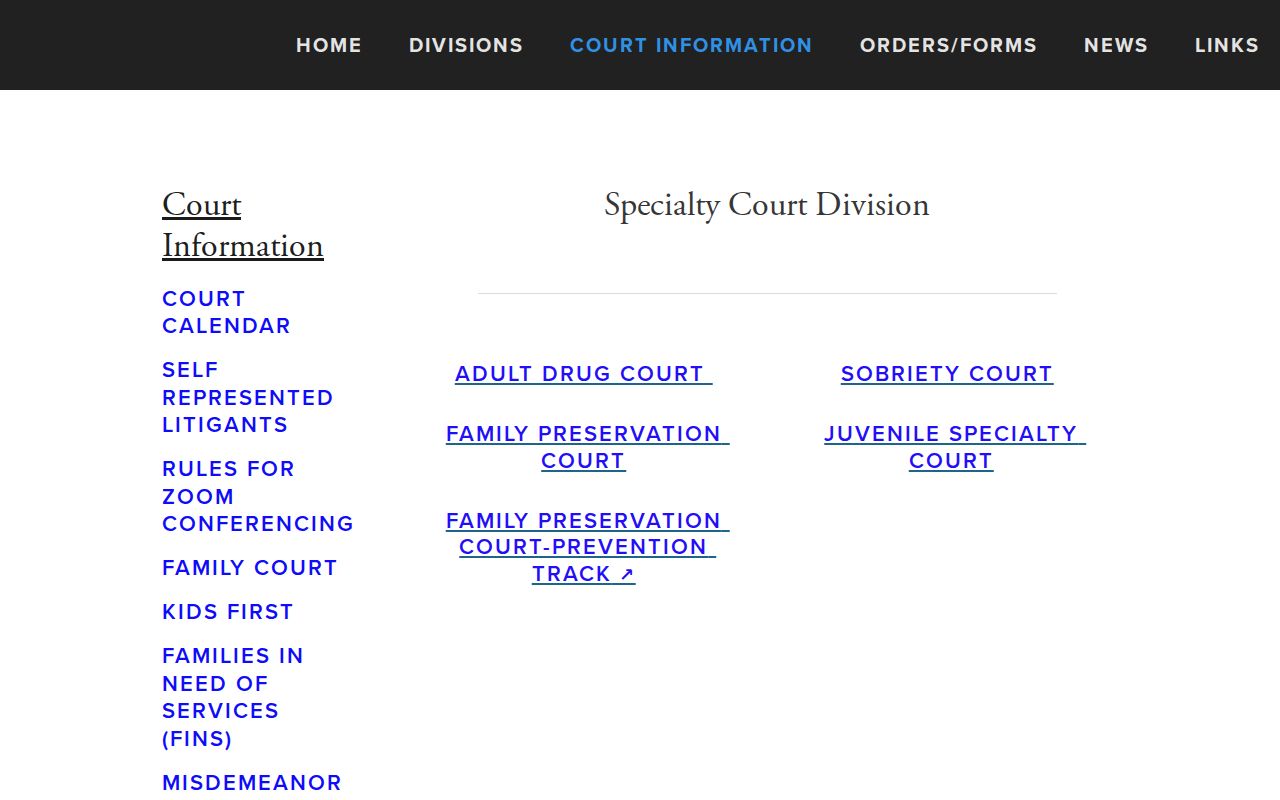
Read any specialty setting against the whole Lafayette docket. The court's own orders control what participation means in a given case.
Public Access and Sealed Lafayette Criminal Dockets
Most 15th JDC criminal docket headers and case histories are open through authorized Clerk channels, within portal coverage and fees. The limits matter. Juvenile records stay confidential unless a law opens them. Expunged criminal records are also confidential, outside statutory exceptions. A sealed file may show only slivers or nothing at all. Ask the clerk which part of a record is legally available.
A criminal docket records court activity. It is not a finding of guilt. For a precise outcome, the controlling source is the court's own order, minute entry, or certified record. If an entry confuses you, request it by case number and have the Criminal Department explain the document type or current custodian.
Louisiana criminal-record limits
La. C.C.P. Art. 251 generally permits examination and copying of court records through the clerk, subject to law and office rules.
Children’s Code Art. 412 makes juvenile court records confidential except as authorized.
Code of Criminal Procedure Art. 973 treats expunged criminal records as confidential subject to its listed exceptions.
Lafayette Criminal Docket Request Channels
When the online route fails, or the docket search misses the document you need, there is another option. The Criminal Department takes complete requests by email. It also answers questions by phone. The instructions ask for the requestor's name and phone, docket number, caption, document titles, number of copies, regular or certified copy type, delivery address, and payment method. Pay first. No turnaround time is guaranteed.
You can also walk a request to the Buchanan courthouse counter. Or mail it to the Clerk's P.O. Box 2009 once payment instructions are confirmed. A formal public-record request to the Clerk works when the record is legally available. A department can tell you if a matter really sits with Lafayette City Court or a municipal clerk. ClerkConnect costs $10 for one day, $25 for 30 days, and $300 for 365 days. Printed court pages run $1 each; printed minute entries are $10.
Lafayette Parish Clerk Criminal Records
800 S. Buchanan Street
Lafayette, LA 70501
(337) 291-6329
Note: The listed certification fee is $10 plus copy charges, so ask for a current certified-copy quote.