
How to Search the Scott Court Docket
The City of Scott publishes no municipal court search. It posts no citation lookup, court-date calendar, or payment portal. That gap shapes the whole Scott docket method. Do not type a name into some unrelated database. Call City Hall instead, and ask who keeps the particular citation or municipal record. Have the notice number, date, and issuer ready. Then say exactly what you want: a hearing date, an ordinance matter, a payment record, minutes, a judgment, or a certified copy.
Scott matters land in several courts. A Justice of the Peace case belongs to a particular ward. Felony, civil, family, probate, and qualifying traffic files go to the Lafayette Parish Clerk. That Clerk serves the 15th JDC. The court named on the document sets your first route. Calling City Hall is a routing step. It is not proof the City keeps every Scott court file.
- Read the citation, summons, or notice for the named court and issuing agency.
- Keep the Scott notice number, date, and record type ready before calling.
- Ask City Hall whether the matter is a City record, Justice of the Peace matter, Parish court case, or issuer question.
- Confirm the current setting, location, payment procedure, and copy option with the identified custodian.
- Use the Parish Clerk or JP route only after the correct Scott record owner is identified.
Scott Docket Portal Not Located
The City of Scott's official contact information is a municipal service channel, nothing more. The City offers no name field or citation-number search. There is no docket filter, public calendar, payment screen, or certified-copy form. For Scott, that absence is itself the answer. Nobody should promise you an Odyssey-style portal, a self-service docket terminal, or an online court schedule. That is something Scott does not publish.
So ask the City directly. Which office holds the record: a municipal office, the Police Department, a Justice of the Peace, Lafayette City Court, the Parish Clerk, or the issuing agency? If the first call bounces you elsewhere, write down the office, the case or citation number, and the next contact. That gives you a confirmed routing trail. It beats treating a broad Lafayette Parish search as a stand-in for a Scott municipal record.
Scott could add a new record tool later. So confirm the current route whenever a notice demands quick action.
The Scott Municipal Court Route
Scott's official source names no municipal court, magistrate court, mayor's court, or public case index. Confirm the municipal route with City Hall based on your notice and the issuing agency. That is not a claim that no Scott matter gets heard locally. It means the public information identifies no general searchable court system. No single clerk route covers every case.
Scott City Hall is the documented starting point. Ask whether the notice involves a city ordinance. It may instead be a municipal payment, a police matter, a Justice of the Peace case, or a Parish court record. Get the custodian's name and current hearing information. Learn the accepted record-request method before you send money or paperwork. And skip the drive-through slot unless City Hall confirms it takes that exact court-related request.
Scott City Hall Record Questions
Scott City Hall lists a 24-hour drive-through drop slot and warns against leaving cash. That is a city-service detail. It does not prove the slot takes court-record requests, citations, court payments, or certified-copy applications. Ask City Hall first whether the request belongs there. Ask what form or payment instrument is required, and how delivery or a receipt works.
The official Scott contact page shows the City Hall route, hours, phone, and fax. It also carries the drop-slot note.
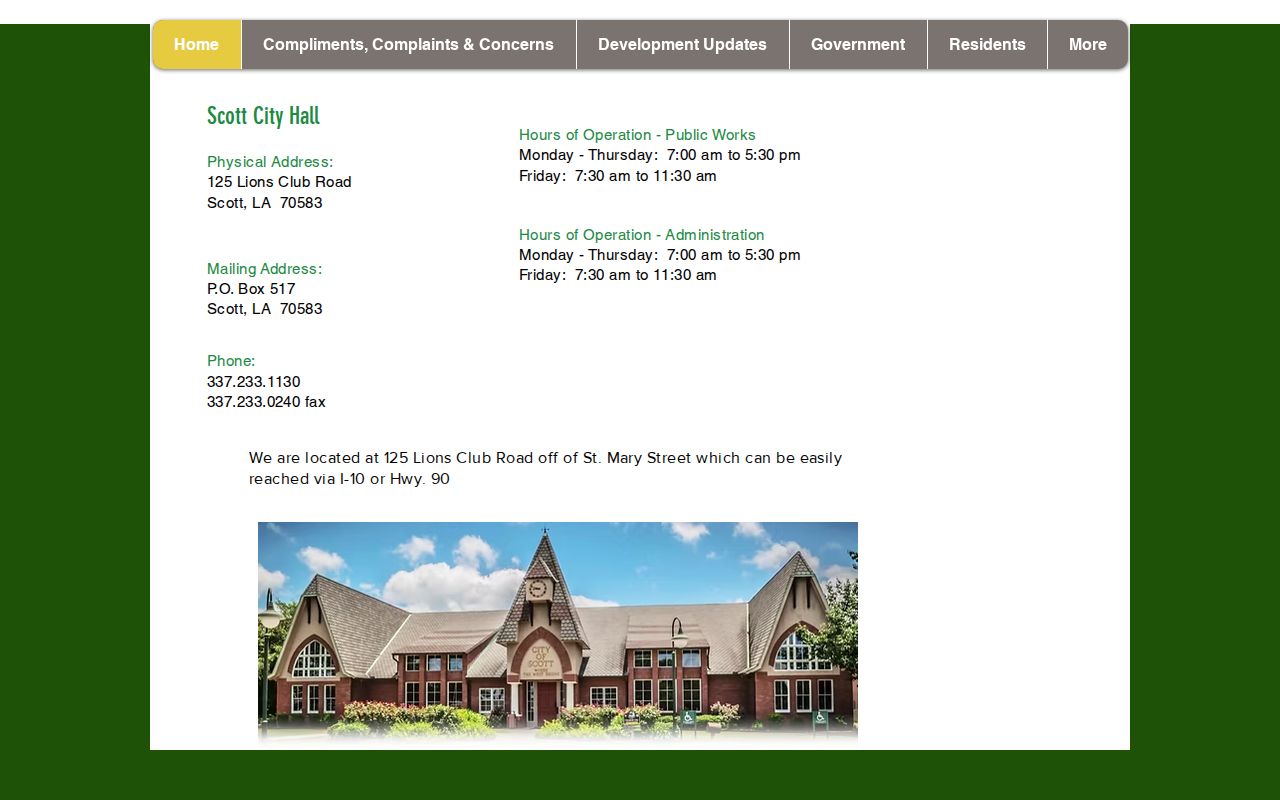
Scott City Hall can point a local request in the right direction. Still, the court or agency that owns the case remains the authoritative source for the docket, the setting, or a copy.
Scott Court Dates and Settings
Scott's city materials include no public court-calendar page. There is no searchable hearing screen either. Check any Scott court date with the office that holds the file. Give that office the notice number, date, issuing agency, and case type. Then ask whether the printed date still stands, whether it marks a hearing or a payment deadline, and whether a later order or notice changed it.
A Scott record can move to another court based on its subject. The 15th JDC publishes a master calendar. But that is not a personal-name search. Use it only after a Parish district case is identified. A Justice of the Peace docket follows its own custody and setting route. So the court decides the right calendar. The Scott address alone does not.
| Notice identifier | Use the citation or summons number exactly as issued. |
|---|---|
| Issuing agency | Tell the custodian whether a city, parish, state, or other agency issued the notice. |
| Owning court | Confirm City, JP, Lafayette City Court, or 15th JDC jurisdiction. |
| Current setting | Ask the identified custodian for the date, time, location, and event type. |
| Change or reset | Ask whether a later notice, order, or clerk instruction supersedes the original date. |
Scott Court Date Confirmation Steps
Work down the chain of authority when a Scott court date matters. Begin with your notice and the office that holds the file. City or municipal question? Ask City Hall or the police or clerk contact it names. A Justice of the Peace file belongs to the ward office. For a confirmed 15th JDC case, read the case history first. Then check the current Lafayette calendar. Confirm with the division or the Clerk. A posted calendar may show a court block, but it can never replace the setting for your specific case.
Carry your best identifier to every contact. Does the docket list several dates? Ask which one is active. Ask what order, minute entry, or reset changed it. This matters most during a closure, an emergency, or a transfer between courts. Do not rely on an old Scott notice. Another court may have taken over the case.
Scott Traffic Tickets
Check the court and the issuer before you pay a Scott traffic or ordinance ticket or hunt for the record. The City publishes no citation-payment page, no public docket portal, and no live schedule. City Hall can tell you the municipal route. State or parish citations, though, may tie back to the issuing agency or to the Lafayette Parish Clerk Traffic Department. A ticket written in Scott does not tell you which court holds the case record.
Ask a few direct questions. Is the fine payable, or is appearance mandatory? What payment method is accepted? How do you get a record or receipt? A Lafayette City Court citation follows that court's own process. A 15th JDC traffic file goes through the Parish Clerk's Traffic Department. Never leave cash in Scott's drop slot. And do not assume an online payment option exists when the City has not published one.
Scott Citation Custodian Questions
A good records request to Scott is short but complete. Give the citation or summons number, the date, and the officer or agency that issued it. Add the court name if it appears on the paper. Also give the record you want, and whether you need a regular or certified copy. Ask where to send it: City Hall, a police records contact, a Justice of the Peace office, the Parish Clerk, or another court clerk. Ask about payment, delivery, and current processing steps too. Scott posts no public terminal. It posts no copy-price schedule, no payment vendor, and no promised turnaround time. So confirm those details by phone before you mail anything.
If the file turns out to belong to the 15th JDC, the Parish Clerk handles it. Its civil, criminal, and traffic departments have set request rules. You will need your name and phone. Include the case number if you know it, the caption, the document title, and how many copies you want. State your choice of regular or certified, your delivery address, and your payment method. That procedure fits Parish Clerk records only. Do not assume it works the same way for a Scott municipal or JP file that no one has verified.
Where Scott Cases End Up
A Scott local matter can stay in the municipal channel, land in the right Justice of the Peace court, or roll into a Parish trial-court file, depending on jurisdiction and case type. The Lafayette Parish Clerk keeps 15th JDC civil, family, probate, criminal, and traffic records. Lafayette City Court keeps its own lower-court files. Eligible appeals move to a separate Louisiana Court of Appeal, Third Circuit docket. Each transfer or appeal creates a new custodian, but it never erases the original route.
Docket flow: Scott local or Justice of the Peace route › Lafayette Parish court when jurisdiction requires › 15th Judicial District Court of Louisiana.
Ward 1 and Ward 2 are the public Justice of the Peace routes for Scott. Which ward applies depends on the address and the subject matter. Confirm the ward and the court that owns the file before requesting a docket. A City Hall answer is one starting point. The original court paper is the best starting evidence for that decision.
Scott Justice of the Peace Records
The Lafayette Parish Clerk lists public contacts for both Justice of the Peace wards. Those wards serve Scott. Ward 1 sits at 811 Rue Bon Secours, Scott, LA 70583, phone (337) 280-8443. Ward 2 sits at 203 Long Creek Lane, Scott, LA 70583, phone (337) 654-5285. These offices handle limited statutory civil matters, small claims, evictions, and other JP business. Still, do not pick a ward just because the event happened in Scott.
That is why every Scott search starts with court identification. A JP docket, a City-related record, and a 15th JDC case history are separate records. Each has a separate custodian. Before asking a ward office to pull a file, give the notice number. Add the parties or caption and the subject matter. The office can then confirm whether it owns the case or point you to the right court.
Scott Court Records and Access
Louisiana law gives the public a right to see court records. The clerk is the officer in charge of them. La. C.C.P. art. 251 names the clerk as custodian. It allows examination and copying unless a statute says otherwise. La. R.S. 44:31 backs that up with its own inspection and copying rights, subject to listed exceptions. So before you request a Scott court docket, figure out which office actually holds the file. It may be the City, a justice of the peace, the Parish Clerk, or another court entirely.
Some records stay off limits no matter who you ask. Juvenile files, sealed matters, expunged records, protected identifiers, and court-specific confidentiality rules all restrict access. A public-records request cannot wave those limits away. If an office denies you, ask for the statutory basis in writing. And keep the request narrow. One date, notice, minute, judgment, or docket entry works far better than a demand for every Scott court record in the building.
Scott access reminder: The City Hall route, a JP docket, and a Parish court case can be distinct records. Confirm the owning office before sending a request or payment.
Scott Federal Docket Distinction
A federal case tied to a Scott resident or event never lands on a Scott municipal or 15th JDC docket. Federal civil, criminal, and bankruptcy matters live in their own court systems. You reach them through PACER or similar federal channels. CourtListener's RECAP archive works as a supplemental source for federal dockets and documents. It is not a Louisiana state-court search. CourtListener offers that supplemental federal archive, linked to official sources, for anyone tracing a federal filing.
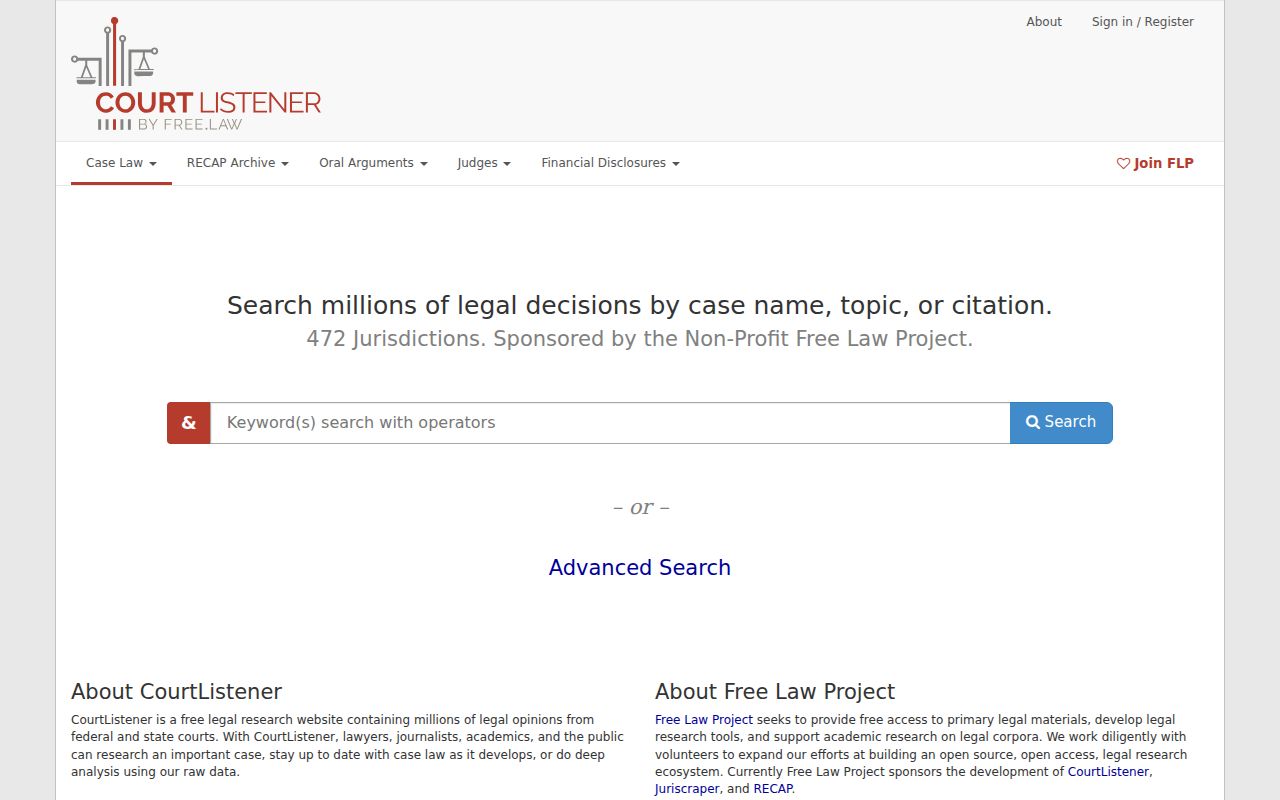
Here is the practical point. A federal docket archive cannot replace City, JP, Lafayette City Court, or Parish Clerk records when you need a Scott case.
Public Access to Scott Court Records
Scott placed fifth in the Parish's top-five city table, and its 2020 Census population was 8,119. The City posts no public court portal. That is a fact about one local access point. It is not a reason to write off all Lafayette Parish records. Start a custodian inquiry at Scott City Hall. The court named on your notice then decides the next step. A confirmed owner beats a broad online search every time.
When you make the request, keep it factual and specific. Name the court, the notice number, and the date. Include the document type, the copy you want, and your contact information. Confirm the office truly holds what you seek. Ask about the filed image, the case history, the official copy, or the hearing date. That careful route keeps a municipal inquiry distinct from a formal Scott court docket search.